
TUZHE PACKAGING GUIDE
Paper Carrier, Window Bag or Food Sleeve: Which Job?
Compare a carrier, window bag and open sleeve by carrying, display and eating tasks. Learn when an inner food pack still needs a separate outer bag.
On this page
These three packs can carry the same brand, but they do different work. A paper carrier groups purchases, a window bag combines enclosure with a viewing area, and an open sleeve gives quick access to one portion. Choosing between them starts with the handoff, not the logo.
Follow the purchase from packing to eating
Ask three questions: what touches the food, what keeps the serving together, and what the customer holds. Sometimes one article answers all three. A snack sleeve, for example, may both support the portion and provide a handhold while it is eaten. A closed pastry carton inside a carrier divides those jobs between two packs.
A transparent window does not add carrying support by itself. Likewise, a strong outer carrier does not establish that its paper is intended for direct food contact. Specify the role of each layer in the complete arrangement.
Where each format makes sense
Carrier: grouping and a usable base
Choose a carrier around the finished inner packs and their combined load. Check base depth, entry through the opening and handle access. Printed paper carriers show this outer-pack role; the food can remain in a separate product-specific carton.
Window bag: enclosure with a deliberate view
Position the filled product behind the actual window. A loaf can disappear behind the opaque panel when it settles, or a closure can fold across the viewing area. Evaluate bread bags with printed panels with the loaf and chosen closure in place, rather than judging an empty flat bag.
Sleeve: access while holding a portion
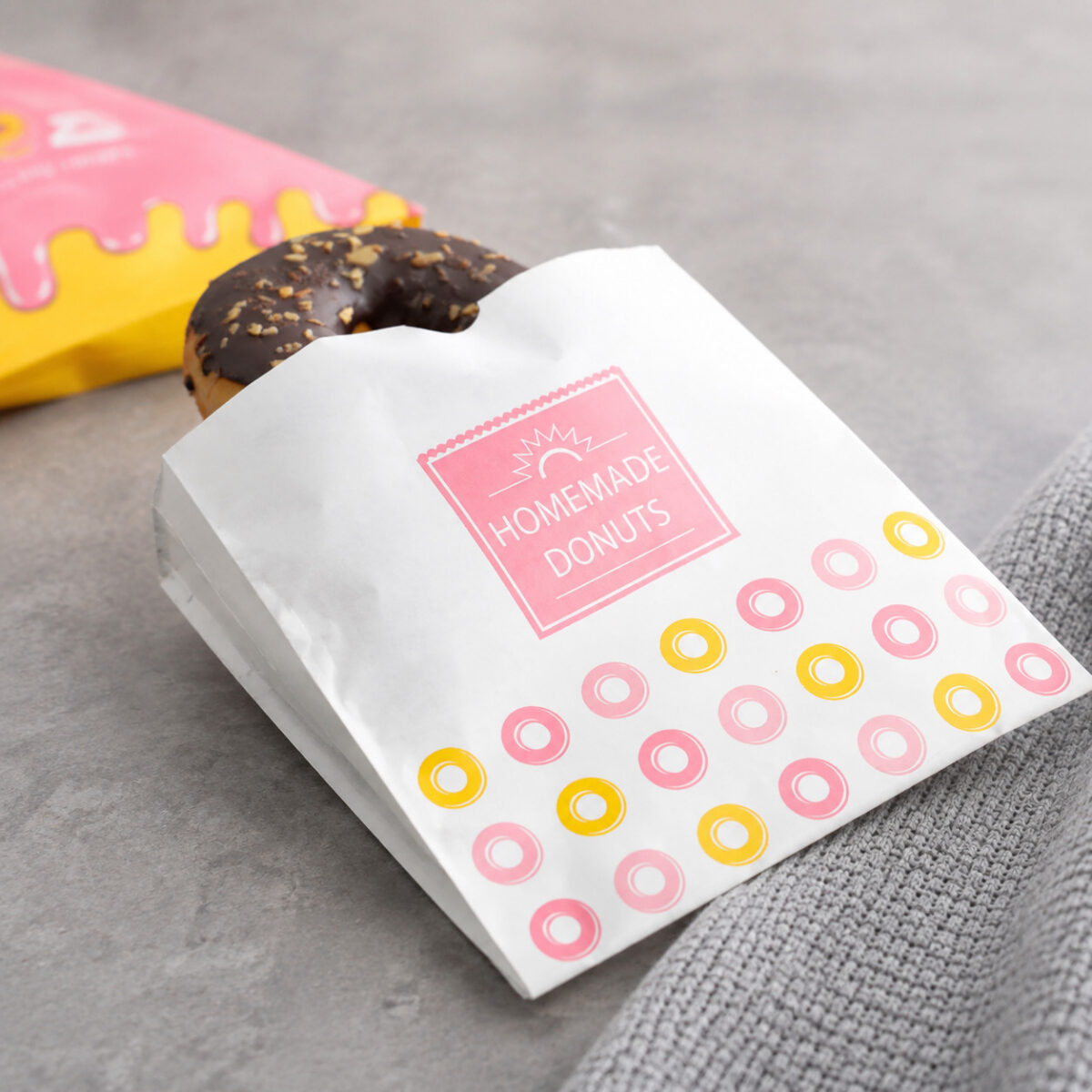
An open sleeve leaves part of the serving accessible. Its opening, support area and grip need to suit how the food is eaten. Printed food sleeves illustrate the format. Discuss the exact paper and contact conditions separately from the graphic design.
Decide whether another layer has a purpose
For a walk-away snack, adding a carrier may offer little benefit unless the order contains several items. For a loaf and two pastry cartons, an outer bag can provide grouping that none of the inner packs offers. A useful extra layer solves a carrying, separation or identification problem.
Trial the complete purchase. Do not approve each empty pack in isolation and assume the combination will work. Watch for a window pressing against another carton, a sleeve tilting in an oversized carrier or a handle obstructing removal.
Keep a clear selection rule
Write the decision in plain terms: “Use this pack for this serving and this handoff.” List the conditions that require a different format. The rule should remain understandable when the seasonal artwork changes.
For choosing sizes across the whole counter, continue with planning a bakery bag range. For deciding whether paper is suitable for a proposed application at all, see paper-bag uses and limitations.