
TUZHE PACKAGING GUIDE
Compare Clear Dessert Packaging with a Consistent Trial
Compare clear dessert containers using the same serving, closure routine and handling conditions. Record specific faults instead of choosing by clarity alone.
On this page
Two empty clear containers can look much alike while behaving differently when filled. A useful comparison keeps the dessert and routine consistent, then records where each sample succeeds or fails. Otherwise a change in portion size can be mistaken for a difference between packages.
Define the comparison before opening samples
Identify the two sample references, the serving configuration and the purpose of the comparison. For example, you may be deciding which tray is easier to close at the counter or which opening arrangement better suits a decorated portion. Avoid asking a single observation to answer every packaging question.
Confirm that both candidates have a suitable internal shape first. The lid-profile fit guide handles geometry. Comparing one well-fitting container with one that presses on the topping tells you little about their relative closure quality.
Keep the serving and routine consistent
Use comparable portions, the same liners or inserts and the same loading sequence. Record the actual packing and holding conditions relevant to the application. If one sample is reviewed immediately and another after a different routine, note that difference instead of combining the observations.
Agree on the number of repetitions appropriate to your decision and available samples. A single successful close can reveal a workable example, but it does not establish a production defect rate. This is a practical selection trial, not a laboratory certification or statistical quality standard.
Use observations that lead to a decision
| Stage | Record | A useful follow-up |
|---|---|---|
| Closing | Where the rim remains disengaged | Check alignment, components and closing instruction |
| Lifting | Where the filled base bends or the contents shift | Review support points and tray arrangement |
| Opening | Where the lid catches or movement disturbs the dessert | Reconsider the opening geometry or access |
| Presentation | Which feature is obscured by labels, ribs or reflections | Adjust layout or graphic placement |
Write “rear-right corner not engaged after the normal closing step” rather than “bad lid.” Photograph the location and keep the sample reference visible. This gives the supplier something specific to investigate.
Separate the physical trial from documentation
A good closure and a clear view of the dessert do not identify the resin, treatment or suitability for a particular food. Request that information for the proposed construction. A visually attractive sample should not compensate for an unanswered material question, and a document does not replace a practical fit check.
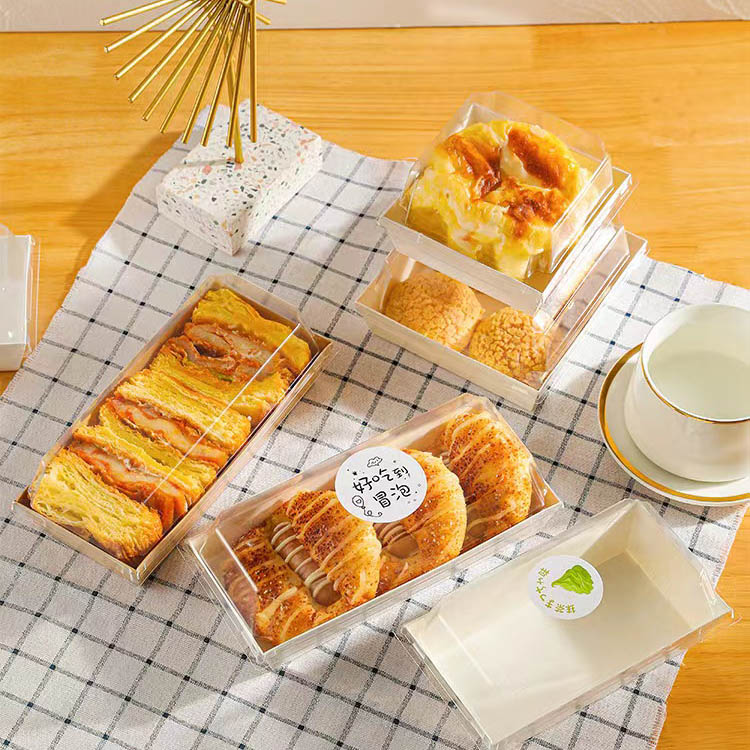
For an assortment, compare clear-lid bakery trays with a suitable arrangement in clear-cover pastry boxes. Keep any differences in inserts and supplied parts in the comparison record.
Choose with reasons and unresolved items
Summarize which candidate suits the intended routine, which changes remain open and what evidence supports the choice. If the selected structure changes before supply, review the affected observations again. Transfer the final references into the sample approval record so the decision remains tied to the article actually examined.