
TUZHE PACKAGING GUIDE
Fit Clear Dessert Containers to Domes, Slopes & Toppings
Check the three-dimensional space inside a clear dessert lid. Match round portions, cake slices and pastry arrangements to the usable base and lid profile.
On this page
A clear cover can be tallest at the center and much lower near its shoulder. That makes maximum height a poor description of usable space for a dessert with fruit, cream or decorations near the edge. Compare the shape of the food with the shape inside the cover.
Sketch the dessert in two views
A top view records the footprint, while a side view shows where height is needed. Include toppings that overhang the pastry, a flared paper cup and anything added to the base. For a wedge-shaped slice, the high rear edge and narrow front point need different checks.
Place these outlines in the proposed container. Identify the closest points at the base, shoulder and top. A dimension taken outside a rib or flange should not be mistaken for the uninterrupted space available to the food.
Use the lid profile to choose the next sample
- Round dome: examine the narrowing space around a tall portion, especially where decoration spreads outward.
- Sloping slice cover: compare the rear topping height and the way the cover approaches the cut face.
- Broad tray cover: inspect the shoulder over edge portions and any internal features above the arrangement.
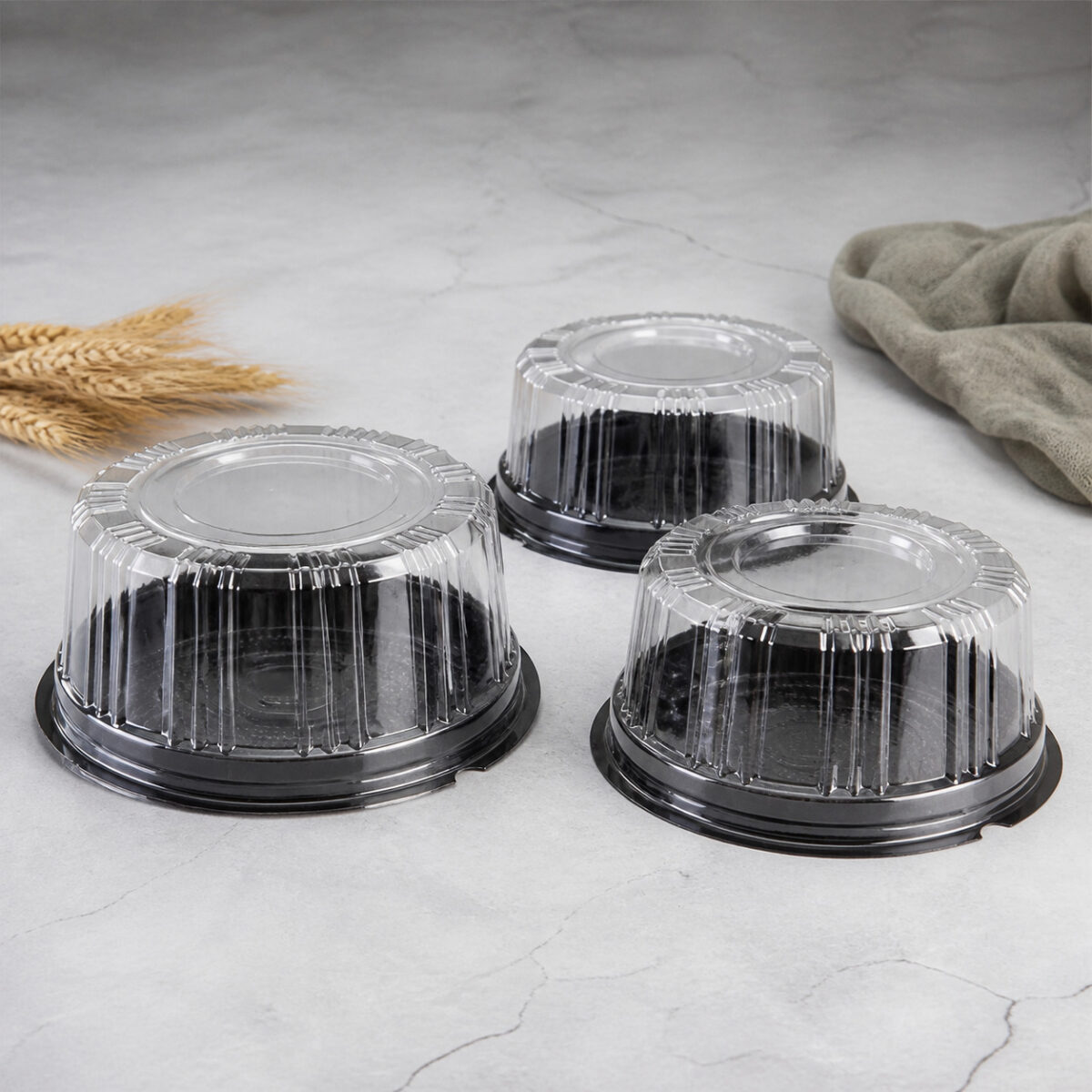
Mini round containers with black bases and triangular cake-slice packs illustrate why nominal volume or one overall height cannot make these formats interchangeable. Choose the next sample by the location of the clearance you need.
Check the closing motion
The food must remain clear while the lid is being fitted, not only after it is seated. Observe whether one edge is positioned first and whether the opposite edge sweeps inward. A topping may be disturbed during closing even when it would fit in the final position.
Use a simple stand-in for an initial geometry screen where practical, then inspect the complete serving. Record the contact point and the motion that causes it. Increasing the overall package size may be unnecessary if a different lid profile resolves that specific interference.
Leave room to use the dessert
Fit includes removal. Check where the customer lifts the lid and how the serving is taken from its base. A tightly fitted round pastry can look tidy but offer no comfortable access. Include any utensil, sleeve or label that changes the opening sequence.
For several pastries, start with their arrangement rather than treating the tray as one large cavity. The dessert layout design guide addresses dividers and visual hierarchy once the container family has been selected.
Resolve geometry before comparing performance
Ask for the material specification and intended-use information for the exact container and cover. Appearance alone does not establish suitability for a food or service condition. Once two candidate formats both fit, compare them using the same serving and routine in the clear-container trial worksheet. That keeps a lid-shape problem separate from a closure or handling problem.