
TUZHE PACKAGING GUIDE
Launch a Dessert Pack with a Clear Decision Checklist
Move a new dessert pack from portion definition to a reviewed sample. Use clear decisions and records for format, layout, materials, artwork and packing.
On this page
A new dessert pack involves several connected decisions. Solving them in a useful order reduces the chance of final artwork being placed on a structure that later needs to change. Use this checklist to organize the project and identify the next unresolved decision.
Decision 1: what exactly will be packed?
Record the portion shapes, count, widest outline and highest decoration. Define the intended variations, including seasonal substitutions that the same pack is expected to hold. List liners, utensils and accessories as well as the food.
Keep: a measured contents description and a photograph of the intended arrangement. If the portion is not yet defined, mark that dependency rather than pretending the package size is settled.
Decision 2: which structure deserves a sample?
Shortlist by portion geometry and count using the dessert-format comparison. Decide whether fixed positions, an open tray, a shaped single pack or a window carton best supports the serving. Add the required opening and carrying arrangement.
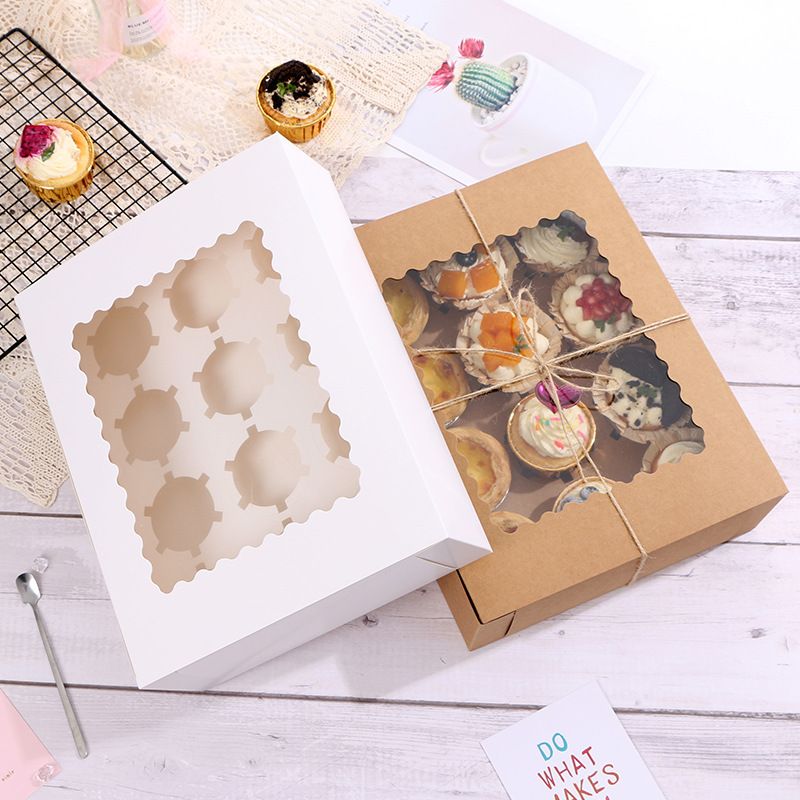
Keep: the candidate reference and the reason it fits the task. A possible starting point such as a window carton with cupcake inserts should remain a candidate until its actual supplied layout has been reviewed.
Decision 3: does the loaded layout work?
Review the base, lid profile, insert and removal access with the intended contents. Use the layout and label guide to place dividers and information. Identify the exact point of any clash or unsupported area so a revision can target the cause.
Keep: annotated photographs of the loaded and partly opened sample, plus the selected drawing and insert references.
Decision 4: is the proposed construction defined?
Ask for the component materials and information relevant to the intended food and use conditions. Keep those responses separate from visual observations. A successful tabletop fit does not answer every material or handling question.
Where two clear containers remain on the shortlist, use a consistent comparison trial to compare their behavior. Record which conditions were held the same and which differences remain unresolved.
Decision 5: do the artwork and packed set match?
Place the final artwork on the agreed dieline and review it on the assembled, loaded pack. Include labels, cards and utensils. Check which information remains visible at handoff and how the customer begins opening.
Keep: the artwork revision, proof reference, complete component list and packing instruction. If a structural change follows, identify the files and checks it affects.
Choose the next action from the open item
A project with unresolved dimensions needs a fit decision. One with accepted geometry but uncertain wording needs an artwork decision. Treating both as “waiting for sample approval” can hide who needs to provide the missing information.
Close each item with a named reference and an agreed outcome. The sample approval method provides the final record. Bring the complete brief to the custom packaging discussion when the next step requires a proposed structure, material or sample.
This checklist is a project guide, not evidence that a pack has passed a laboratory or production test. The accepted records should state exactly what was reviewed and what remains outside that review.