
TUZHE PACKAGING GUIDE
Measure Paper Bags: Opening, Base, Gusset & Load
Measure a paper carrier around its actual inner box. Check the opening, usable base, gusset and loaded height with a worked dimensional example.
On this page
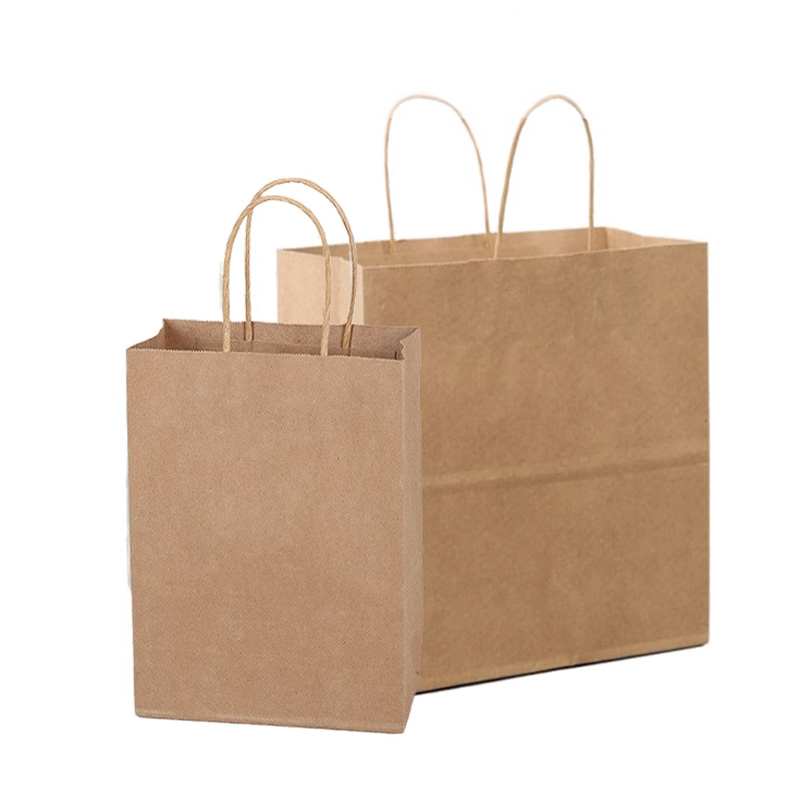
The size printed beside a flat paper bag does not always tell you whether a filled cake box will sit comfortably inside it. An opening can accept the carton while the base remains too narrow to keep it level. Measure the bag in the shape it will have during use.
Agree on the dimension order
Suppliers may describe a bag using width, gusset and height, but confirm the order on the actual drawing. Ask whether the stated dimensions refer to the finished article or a particular measurement convention. Keep the annotated drawing with the product reference instead of relying on an unlabeled set of numbers.
Open the sample fully without forcing the folds beyond their intended position. Measure the useful base area and inspect the seam or folds that occupy it. Then compare that area with the outside dimensions of the inner carton.
Check entry and resting position separately
The carton must first pass through the opening and then rest on the base. Include projecting lid edges, side locks or an existing handle in the entry check. Once loaded, confirm that the carton sits flat and the bag walls are not being pulled tightly around its corners.
For a group of containers, arrange them as they will travel before measuring. Adding their individual widths on paper may miss a projection or a gap created by their shape. An actual arrangement also shows whether stacking is required.
A footprint example
Suppose an inner carton measures 240 × 240 mm externally. A bag with a useful base only 220 mm deep cannot hold that carton level in the same orientation, even if the opening appears wide enough. This is an illustrative fit problem, not a recommended production size.
Increasing the base to the carton dimension alone would still leave the handling allowance unresolved. The appropriate allowance depends on the bag construction and the movement needed for loading. Try the assembled combination and record the agreed usable dimensions rather than adding an arbitrary universal clearance.
Height and handles change with the order
Two stacked cartons share a footprint but increase both height and carrying load. Check the space under the handle attachment and the way the top closes or gathers. Handles should remain accessible after the purchase is loaded.
Evaluate the exact handle attachment and base construction with the intended load under an agreed trial. A paper description or photograph does not establish a carrying capacity. If the trial fails, identify whether the issue is fit, a seam, the handle or an unsuitable carrying movement before changing the specification.
Record a useful size decision
- Drawing reference and dimension order.
- Largest inner carton, including projections.
- Opened base measurements and loaded height.
- Order arrangement and carrying load used in the trial.
- Observed interference and the revised sample reference, if needed.
Compare landscape kraft carriers when a wider base is relevant, or paper carriers with handles for another layout. The bakery bag-range guide explains how to decide which orders should share the selected size.