
TUZHE PACKAGING GUIDE
Drawer Dessert Boxes: Diagnose Sliding and Removal Problems
Review drawer dessert packaging as a moving assembly. Check the loaded tray, sleeve entrance, pull point and final removal to locate interference before artwork approval.
On this page
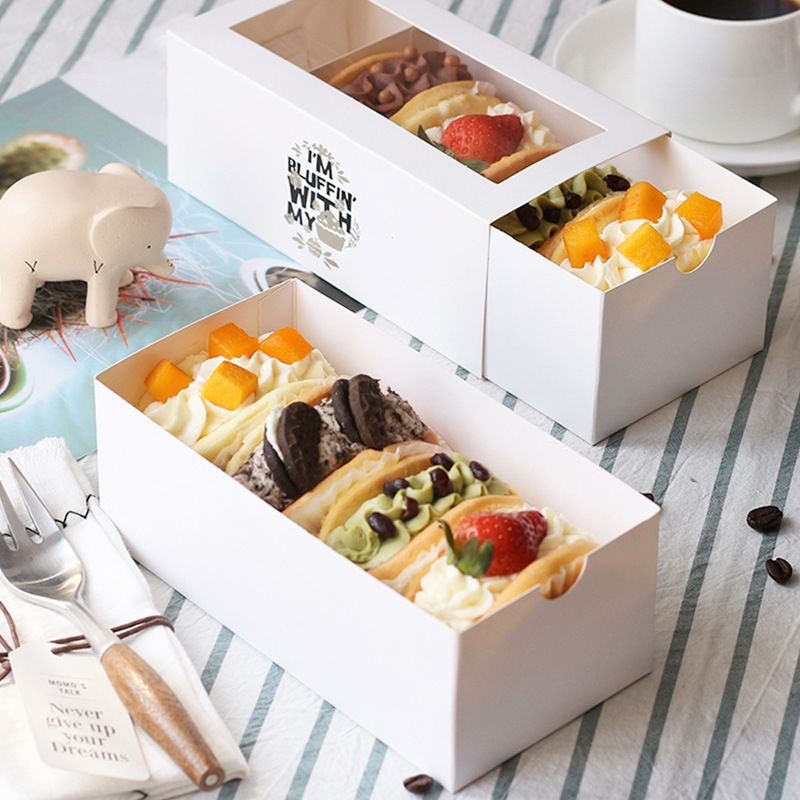
A drawer dessert box has to work while its parts are moving. The tray may fit the sleeve when empty yet catch, flex or shift after the desserts and insert are added. Review the motion from loading to final removal, using the supplied opening direction.
Check the loaded tray before sliding
Fit the insert and arrange the complete dessert set in the tray. Include paper cups, labels, dividers and any decorations that project beyond the main portions. Look along the sides and above the highest point to identify what could meet the sleeve.
Check that the insert sits where intended and does not lift the contents higher than expected. If the layout already presses on the tray walls, resolve that issue before asking the sleeve to contain it. The dessert layout method can help separate an arrangement problem from a sliding problem.
Observe where the motion changes
Slide the tray using the intended pull or push point. Notice whether resistance starts at entry, grows midway or appears only near the closed position. Record the location and the loaded condition rather than describing the whole pack as “too tight.”
| Observation | First area to inspect |
|---|---|
| Tray catches at entry | Sleeve entrance, tray alignment and projecting liner or insert |
| Movement changes when filled | Loaded tray shape, wall pressure and support |
| Topping meets the sleeve | Occupied height along the complete sliding path |
| Tray tips at removal | Pull point, hand support and end-of-travel control |
These are diagnostic prompts, not instructions to trim or force the parts. Compare the observation with the drawing and supplier’s assembly guidance before approving a correction.
Test the customer’s first opening
Hand the closed sample to someone who has not assembled it. Observe whether the pull point and opening direction are understandable. If the sleeve can move in more than one direction, ask how the recipient is expected to control it.
Check what happens as the tray becomes partly unsupported. The customer should have a clear way to hold the tray and remove the first dessert. A smooth empty slide does not demonstrate that the filled presentation is easy to use.
Place graphics around the movement
Review labels, seals and artwork on the closed and partly open pack. A seal may deliberately control opening, but it must be identified as part of the design. An accidental label overlap can obstruct the drawer or tear during use.
Use drawer dessert boxes with inner trays as the relevant structural reference. A hinged window carton is a different opening format and should not be used as evidence for how a drawer design will behave.
Keep the accepted motion in the sample record
Save the tray, sleeve and insert references together with a short opening sequence. After a dimensional, material or finish change, review the affected movement again. Tie the final result to the approved sample version so the artwork and physical assembly remain aligned.